
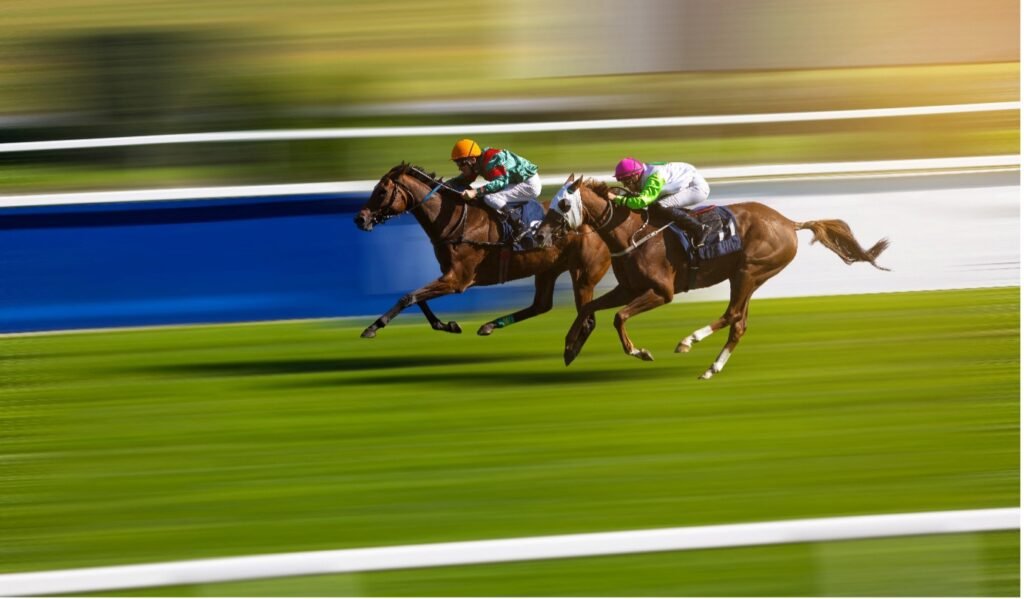
 British Champions Day has closed the Flat season at Ascot every October since 2011, and it has been supplying its own history ever since. Five championship races and a big-field handicap, run on ground that is rarely quick that late in the year, make a searching test. Anyone weighing up the Champions Day betting odds is looking at a card with a long memory.
Frankel bookends the first two years
Frankel won the inaugural Queen Elizabeth II Stakes in 2011 by 4 lengths, then returned the following October for the final start of his career.
The 2012 Champion Stakes was the harder watch. On soft ground he stumbled leaving the stalls, conceded first run to Cirrus Des Aigles, the 2011 winner, and had to be driven to get past inside the last furlong. He won by 1¾ lengths, his 14th win from 14 starts, and was retired. Sir Henry Cecil, who trained him, said afterwards: “There has never been a better horse.”
Noble Mission finishes the family story
Cecil died in June 2013. 16 months later his widow, Lady Cecil, sent out Frankel’s full brother Noble Mission to win the 2014 Champion Stakes under James Doyle.
Noble Mission led from the stalls, was headed by Al Kazeem approaching the furlong pole and looked beaten, then fought back to win by a neck. He had spent his career in his brother’s shadow. He left Ascot with the same trophy.
Muhaarar makes the sprint the main event
The British Champions Sprint was promoted to Group 1 in 2015, and Muhaarar gave the new status instant credibility. Charlie Hills’s colt beat Twilight Son by two lengths under Paul Hanagan to complete a four-race Group 1 sweep of the season’s sprint championship, after the Commonwealth Cup, the July Cup and the Prix Maurice de Gheest.
Ascot was his last race. His connections turned down the Breeders’ Cup, judging that the tight turns at Keeneland would not suit him.
Minding takes on the colts
Minding had already won the 1000 Guineas and the Oaks when Aidan O’Brien sent her against the colts over a mile in the 2016 Queen Elizabeth II Stakes.
Ryan Moore let her stride on and she was two lengths clear entering the final furlong. Ribchester, the best miler in the field on paper, cut into the deficit with every stride and ran out of ground half a length down. It was her fifth Group 1 of the season.
Cracksman leaves nothing to argue about
Two more Champion Stakes wins were not close at all. Cracksman beat Poet’s Word by seven lengths in 2017, then came back in 2018 and beat Crystal Ocean by six. John Gosden trained him, Frankie Dettori rode him, and no other horse has won the race twice since it moved to Ascot.
Margins like that are rare at this level. Anyone scanning the racing results today will find Group 1 races decided by inches far more often than by daylight.
A nose settles the Long Distance Cup
The 2019 Long Distance Cup was the opposite kind of finish. Stradivarius arrived unbeaten in ten races and went to the front in the straight under Frankie Dettori, which normally ended the argument.
Kew Gardens would not have it. Donnacha O’Brien’s mount had been headed, came back at the favourite along the rail and regained the lead in the last few strides to win by a nose. Kew Gardens had missed most of the summer with a back injury picked up before Royal Ascot.
Baaeed’s last afternoon
Baaeed announced himself on the day and said goodbye on it. He won the 2021 Queen Elizabeth II Stakes by a neck from Palace Pier under Jim Crowley, then returned in 2022 for the Champion Stakes unbeaten in ten starts.
Soft ground and Bay Bridge ended that. Baaeed finished fourth, beaten for the only time in his life, and went straight to stud.
Why the day keeps producing them
Ascot in October catches horses at the end of a full season, after the Arc and before the Breeders’ Cup, often the last chance to see a champion before retirement. Frankel, Cracksman, Muhaarar and Baaeed all had their final day there. That is what gives the card its weight.