
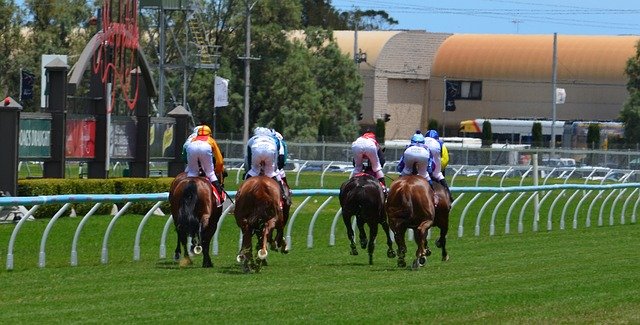
 The first thing to check on a flat racing day is the ground, not the horses. A horse’s form figures can look impressive, but they tell you little if the best run came on ground that the going report no longer describes. The routine below is short. Each step takes a few minutes and needs only the race card and the racecourse’s website or app. It works at any meeting in Britain or Ireland, from a big Saturday card to a weekday evening fixture.
Read the going report before the form figures
Going describes on special horse racing sites or online bookmaker pages like Winkingdom Casino how firm or soft the surface is, and it changes how a horse can run. The going terms run from firm, through good to firm and good, to good to soft, soft and heavy. Each course posts its going report on its website, usually updated on the morning of the meeting. Rain can shift the going within hours, so check the report again a few hours before the first race. A useful rule is to discount any horse whose only good run came on different ground, because it may not handle today’s surface. In a flat handicap, the going often matters more than the form figures. Skip a horse whose only strong performance came on a different surface, unless the race card gives a clear reason to expect it to cope.
Check the draw before choosing a sprint runner
Draw bias is the tendency for stall position to affect results, and it shows most clearly in sprint races. Horses in a sprint have less time to move across the track, so a poor stall can leave a runner boxed in or short of ground early. Look at the stall numbers on the race card before you rank the runners. Draw figures for a straight course can differ from those for a round one, so check the figures for the exact distance of the race rather than the course as a whole.
Find the draw figures for that exact distance
Many racing websites list draw statistics by course and distance. Pick the table that matches the race you are looking at, since a five furlong sprint and a six furlong sprint can behave differently. Note whether low or high stalls have done better in recent meetings. The rail is not always the best place to be, and the pattern can change with the going.
Adjust the draw factor for small fields
The draw usually matters less in a small field. In fields of around five or six runners, the going or a horse’s recent form tends to decide more than stall position. Give the draw more weight only when a large field is bunched near the rail. A poor stall in that situation can cost ground early and be hard to make up.
Compare weights carried with the handicap mark
Weights appear on the race card in stones and pounds, and a horse rated higher usually carries more. Compare the weight on today’s card with the weight the horse carried last time out. A few pounds can decide a close finish, so a change that looks small still matters. An apprentice rider’s claim appears in brackets beside the jockey’s name. The apprentice allowance is commonly 3 to 7 pounds, which can offset a higher weight for a horse that would otherwise look out of the picture.
Check declarations and non-runners twice
Plans fall apart when a horse drops out late, so check the racing declarations before you commit to any selection. Non-runners can appear overnight and again on the morning of the meeting. Use this short scan on each runner before you settle on a plan:
- Confirm the horse is still listed as a runner.
- Compare its weight with the weight from its last run.
- Check its stall number against the draw figures for the distance.
- Note any change in the going since its last run.
Check the non-runners list once more about thirty minutes before the first race, since late withdrawals can still reshape the field.
Set a spending limit before the first race
Set the limit before the first race, not during the afternoon. Write the total budget for the day on the race card, then split it across several races rather than one. No single race can then take the whole amount. If you place bets through an online account such as Winkingdom Casino, look for the deposit limit setting and switch it on before you add any funds. Where the account offers it, the setting usually sits in the account menu, so it is in place before a bad start tempts you to change it. Stop for the day once the budget is gone, and do not top up after a race you lost. A fixed rule is easier to keep than one adjusted mid-card. No single check predicts a winner, and the routine is built that way. Run the same steps before every meeting, and the day becomes something you can judge and repeat.