
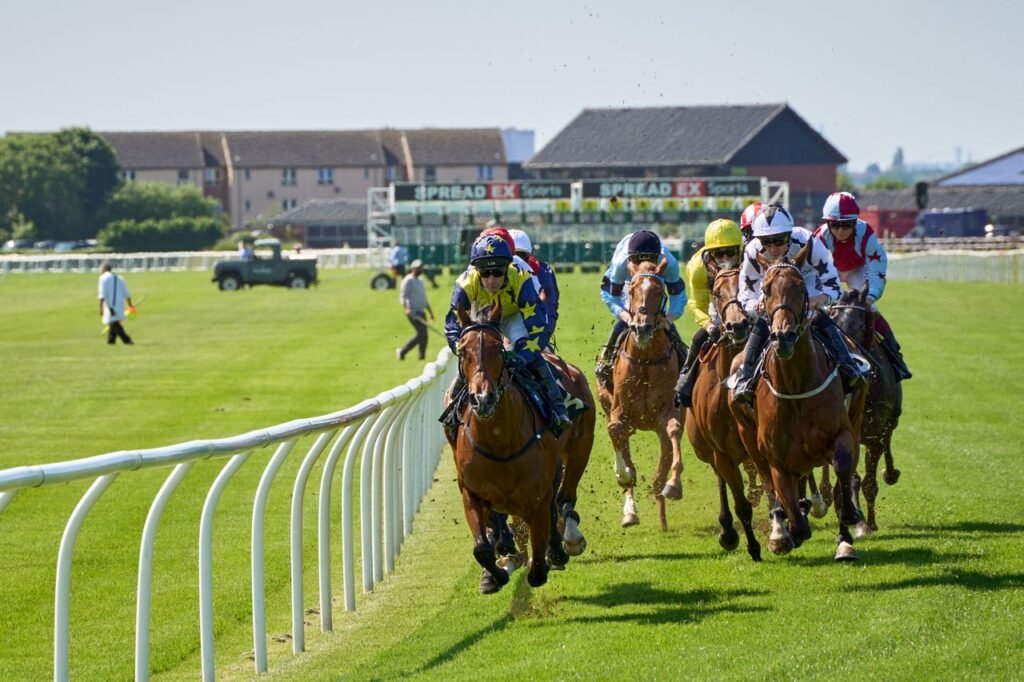
 New Zealand’s biggest thoroughbred meetings take place on circuits with very different demands. Ellerslie’s tight turns, Trentham’s long straight and Riccarton’s expansive layout all influence how horses settle, move into contention and finish. For anyone listening to a race call, knowing the course helps turn a stream of horse names into a clearer picture of the contest.
The three venues also have distinct calendar highlights. From Ellerslie’s Karaka Millions to the Wellington Cup at Trentham and Christchurch’s New Zealand Cup Week, each offers its own test of pace, positioning and stamina.
Ellerslie: Auckland’s showpiece circuit
Ellerslie, close to central Auckland, is an undulating, right-handed circuit of just under 1,900 metres. Its sweeping turns and relatively short run to the post make positioning important, so a commentator needs to spot which runners have found room and which are still waiting for an opening.
The course returned to racing in January 2024 after a lengthy closure for the installation of a StrathAyr surface. The early months were bumpy. After horses lost their footing at two April meetings, the club brought forward its winter renovation to remove the root matting that had affected traction. It’s a reminder that track reports and rail settings still deserve close attention on race day.
Ellerslie’s signature event is Karaka Millions raceday in late January. Its features for young horses showcase graduates of New Zealand Bloodstock’s yearling sales, and since 2025 the card has also hosted the Group One Railway, previously a New Year’s Day fixture. The 2026 meeting offered contrasting stories. Queensland trainer Liam Birchley won the Karaka Millions 2YO for a third time with Dream Roca, while Australian sprinter Jigsaw took the Railway. For callers, races like these demand close attention to early speed and late challenges.
Trentham: Wellington’s wind-affected test
Trentham Racecourse, in Upper Hutt near Wellington, is a left-handed circuit known for its long home straight. That lengthy run-in gives horses time to build a challenge, but it also makes the timing of a move worth watching. A runner travelling comfortably at the turn may still have a demanding finish ahead.
Wind is another factor at a venue near New Zealand’s famously breezy capital. Its effect depends on the day’s conditions, so commentators should avoid assuming that every headwind or tailwind produces the same result. Instead, they can watch whether the front-runners hold their rhythm and how the chasing pack responds as the field straightens.
Trentham’s signature occasion is the Wellington Cup meeting, part of its summer carnival. The Group Three Cup is run over 3,200 metres and places a premium on stamina as well as judgement of pace. In a staying race, the story often develops well before the final straight: which horses have settled, which jockeys are saving ground and who is being asked to improve early?
Rail placement and the official track rating can also change how a performance should be read. Checking these before a meeting helps commentators separate an individual horse’s effort from the conditions facing the whole field.
Riccarton: Canterbury’s spacious circuit
Riccarton Park in Christchurch is a broad, left-handed turf circuit. Its open setting creates a different visual challenge from Ellerslie. As runners fan across the course approaching the finish, commentators must track challengers on both sides rather than focusing only on the horse nearest the rail.
The course’s position on the Canterbury Plains also makes weather and surface conditions an important part of the pre-race picture. Even a spacious layout doesn’t guarantee an unbiased contest, as barriers, rail settings, pace and the state of the ground can all influence where runners travel and how strongly they finish.
Riccarton’s headline occasion is New Zealand Cup Week in November. The carnival features the 3,200-metre New Zealand Cup, a Group Three staying race, alongside the Group One New Zealand 1000 Guineas and 2000 Guineas. The 2026 edition wrapped up on 14 November in front of a sell-out crowd, with Just Charlie winning the Cup for a Whanganui stable and Australian colt Kumara Straight taking the 2000 Guineas.
That variety matters in the commentary box. In the closing stages of a two-mile Cup, a caller must describe how stamina and pace have shaped the field. In a Guineas, attention shifts more quickly to tactical position and which young horses can produce the strongest finishing run.
What each track tells a commentator
Knowing a course means more than memorising its dimensions. At Ellerslie, the approach to the final bend can explain why a well-fancied runner is searching for room. At Trentham, the long straight invites a closer look at when jockeys begin their challenges, particularly in testing conditions. At Riccarton, the spread of runners across the track makes accurate identification and clear description especially important.
These observations help spectators too. A horse finishing strongly at one venue may face a different tactical problem at another, even over a similar distance. Listening for comments about position, pace, track rating and course shape adds context that a finishing order alone can’t provide.
Racing beyond the racecourse
Horse racing’s imagery extends well beyond the track, appearing in films, video games and online pokies. Spin Casino New Zealand, for example, lists Front Runner Link & Win, a Games Global pokie with a race-day theme, among its games. Like other themed pokies, it borrows the sport’s visual language, such as trophies and horses at full gallop, while remaining a separate form of entertainment with no connection to real races or results.
Final thoughts
Ellerslie, Trentham and Riccarton each put a different stamp on New Zealand racing. Their signature meetings celebrate the sport’s speed, emerging talent and staying power, while their layouts give commentators distinct challenges to explain. Understanding those differences makes every race call more informative.