
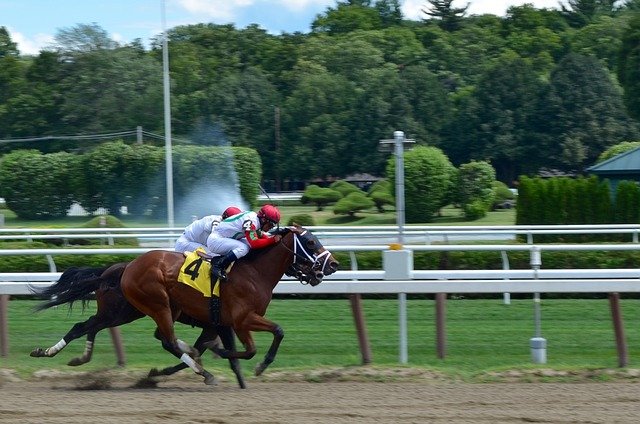
 Horse racing is often presented as a sport of speed and instinct, but there is much more behind a race than simply picking the horse with the highest profile. Understanding form, track conditions, jockeys, trainers, and race distance can help spectators make more informed assessments before a race begins. While no method can predict the result with certainty, a structured approach can make following horse racing more interesting and help separate thoughtful analysis from guesswork.
Understanding the Basics of Horse Racing Tips
Good horse racing tips usually begin with information that is already available before the horses enter the track. Recent form is one of the first things worth examining. A horse that has performed consistently well in its previous races may deserve attention, but the finishing position alone does not tell the entire story.
For example, a horse finishing fifth in a competitive field may have performed better than one that won a weaker race. Look at the quality of its opponents, the distance, the track, and how the race developed. A horse that was blocked during the final stages or had to race wide may have a more encouraging performance than the result suggests.
It is also useful to compare several recent races rather than relying on one result. Racing can be unpredictable, and a single poor performance may have been caused by unsuitable conditions or an unusual race scenario.
Pay Attention to the Distance
Every horse has its own strengths. Some are particularly effective over shorter distances, where acceleration and early speed are important. Others perform better over longer races, where stamina and tactical patience become more significant.
When assessing a race, check whether the horse has previously performed well at a similar distance. A strong record over the same trip can provide useful evidence, especially when combined with suitable track conditions.
Distance should not be considered in isolation, however. The pace of the race can also affect how a horse performs. A fast early pace may benefit horses that finish strongly, while a slower race can sometimes favor those able to stay near the front.
Consider the Jockey and Trainer
The relationship between a horse, jockey, and trainer can have a noticeable influence on race performance. Experienced jockeys understand how to position a horse, when to conserve energy, and when to make a move.
A trainer’s record is also worth examining. Some trainers have particular strengths with certain distances, surfaces, or types of races. Looking at recent results can provide an indication of current form, although past success should never be treated as a guarantee of future performance.
Changes in jockeys can also attract attention. Sometimes a new rider is selected because they have experience with the horse or because their riding style suits the expected conditions.
Track and Weather Conditions Matter
The condition of the racing surface can significantly change the way a race unfolds. On turf, for example, rain can make the ground softer and influence which horses are comfortable running on it. Some horses handle soft ground naturally, while others are much more effective on firm surfaces.
Weather can also affect visibility, wind, and the overall pace of a race. Before making an assessment, check the expected conditions and compare them with each horse’s previous performances.
Course layout is another factor. Tight turns, long straight sections, uphill finishes, and the position of the starting stalls can all influence tactics.
Look Beyond the Favorite
One of the most common mistakes is assuming that the favorite is automatically the best choice. A horse may attract significant attention because of its reputation, previous victories, or connections, but that does not necessarily mean it is ideally suited to the particular race.
Instead, compare the leading contenders objectively. Look at recent form, distance, ground conditions, competition, and likely race tactics. Sometimes a less fashionable horse may have characteristics that make it particularly well suited to the day’s conditions.
This approach encourages analysis rather than simply following popularity.
Keep a Record of Your Observations
Keeping notes can improve your understanding of racing over time. Record why a particular horse caught your attention, what conditions were expected, and how the race eventually developed.
After several races, patterns may become easier to recognize. You might notice that certain horses consistently perform well at a particular distance or that some trainers achieve better results under specific conditions.
Most importantly, horse racing should be approached as entertainment rather than a guaranteed way to make money. Results are uncertain, and even careful analysis cannot eliminate risk. If money is involved, setting a clear budget and avoiding decisions based on emotion are sensible precautions.
Learning to assess a horse race takes time. There is no single statistic or secret formula that can explain every result. The most useful approach is to consider several factors together, including recent form, distance, jockey and trainer records, track conditions, and race tactics.
The more carefully these details are compared, the easier it becomes to understand why races develop differently from one another. Good analysis does not mean predicting every winner. Instead, it means making decisions based on relevant information and recognizing the many variables that make horse racing such a fascinating sport.