
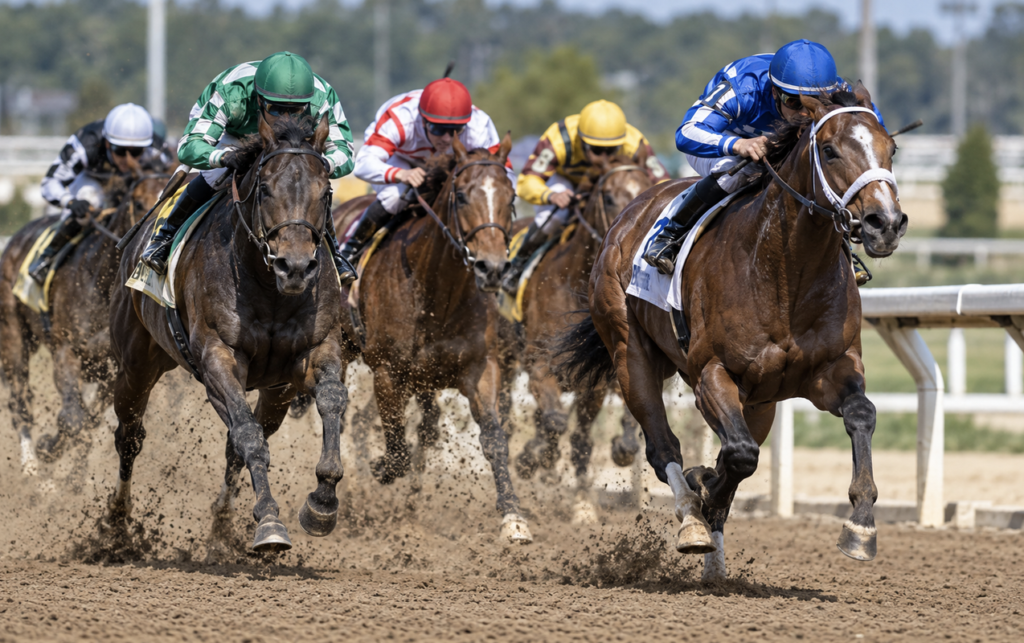
 The track conditions could have a significant impact on the outcome of the horse race. The surface of the track could affect a runner depending on its type, the length of the race, the overall speed of the horses, and their stamina. A horse that demonstrates excellent speed performance on the fast ground could lose its effectiveness when the track turns wet.
The betting companies consider the going as an essential factor when tracking the performance of a runner. Coverage on 1xbet iraq can sit alongside racecards, going reports, and performance data when assessing conditions. It is vital to create a list of the horses that will participate in a race and cross-reference it with the course of any specific location to see how each animal has adapted to the specific grounds.
The track conditions might change during the day when several races occur. The precipitation, wind, additional watering, or a series of races affecting the quality of the turf will influence its quality to a certain extent. The early races results are essential as some of them could become predictors of the outcomes of the subsequent events.
What the Going Says About the Ground Surface
The going is simply a description of the actual surface on which the race takes place. From a bookmaking perspective, the British terms for firm, good through to heavy are interpreted by odds, form figures, and weighted time allowances applied to the races on that certain surface. The firmer conditions allow horses to perform better as they should conserve more energy on each stride. A five-furlong sprint is usually around 1006 meters, and there is not much margin for error when the runner reaches an obstacle due to the lack of endurance needed for longer sprints.
The main track conditions effects are as follows:
- firmer ground often rewards speed and acceleration;
- softer ground can favour stamina and balanced action;
- uneven moisture can create faster lanes across the course.
The Influence of Past Runs Data
The data and information related to recent results become essential predictors of an ongoing race when the track provides with an adequate surface for the event. It is not enough to focus on the animals that have demonstrated their winning prowess exclusively on slow grounds when the race is set to takeplaceon fast tracks.
The analysis of a runner should be cross-referenced when studying the form of the participants. A brown horse with a consistent series of runs on good to firm grounds will get better returns when compared to a similar animal with a mixture of good runs on heavy or sloppy grounds. The same approach is applied when analysing the distance and pace of a race. Similar finishes on varying surfaces should be seen as positive indicators. At the same time, not all pace notes translate to the same types of speed.
A horse’s draw, speed, and track bias are three primary elements that should be used as a bookmaker at 1xbet to establish a comprehensive understanding of the upcoming race. Conditions make certain distances, weights, and even pacing more relevant than others.
Draw, Pace, and Track Bias
Track conditions can change which parts of a course race fastest. One side may retain more moisture or receive more wear. That can turn stall position into an important tactical factor.
Punters reading the 1xbet site may compare early races with later handicaps to identify emerging patterns. A bias looks stronger when several races show similar movement across the track. One result may reflect pace rather than surface advantage.
Useful signs of a developing bias include:
- repeated winners using the same rail or strip;
- leaders holding position unusually well;
- wide runners losing ground on turns;
- split fields showing clear differences between groups.
Weather Effects the Predictions of Race Results
The weather has a noticeable influence on the prediction algorithms, but it seldom determines an outcome of a single race. The changing grounds due to moisture and the specific time allocated for a race can change the demands on both the pacing and the stamina of a runner. The turf should be watered if needed to ensure the proper conditions for a race.
The data related to the bookmaking industry and odds calculations can be found across different websites, including the 1xbet. It might be helpful to provide a reader with a comparison of different races running concurrently on other racetracks. An analysis showing how a certain surface can predict an outcome of the is more effective when the going note is compared across different events. The early races provide more data, and the predictions on later ones will be updated when the course changes for the next competitor. It is the same approach that is used when analysing the races within a single card. The information provided through an application does not change the fact that the runner’s course and actual time will determine its success within the competition.
Reading Conditions as Part of the Whole Race
The track never dictates a sole influence on a race; a series of events, including the distance it covers, the pace, the weights, and the shape of the race, as well as the course and the actions of the particular runner are considered. A proper analysis is focused on determining which animal possesses the most effective mix of speed and endurance to be chosen for an event according to the odds and other factors specified by a particular betting company.
The first step in the analysis should be related to the selection of the suitable surface for a race. Then, the bookmaker should turn the focus on the elements of speed, draw, and track conditions. Races provide sufficient data to verify if the assumptions match the actual results of horse racing events, which allows establishing the value of a prediction based on the track conditions. The bottom line is that the same set of circumstances on the track will demand different approaches from the runners.