
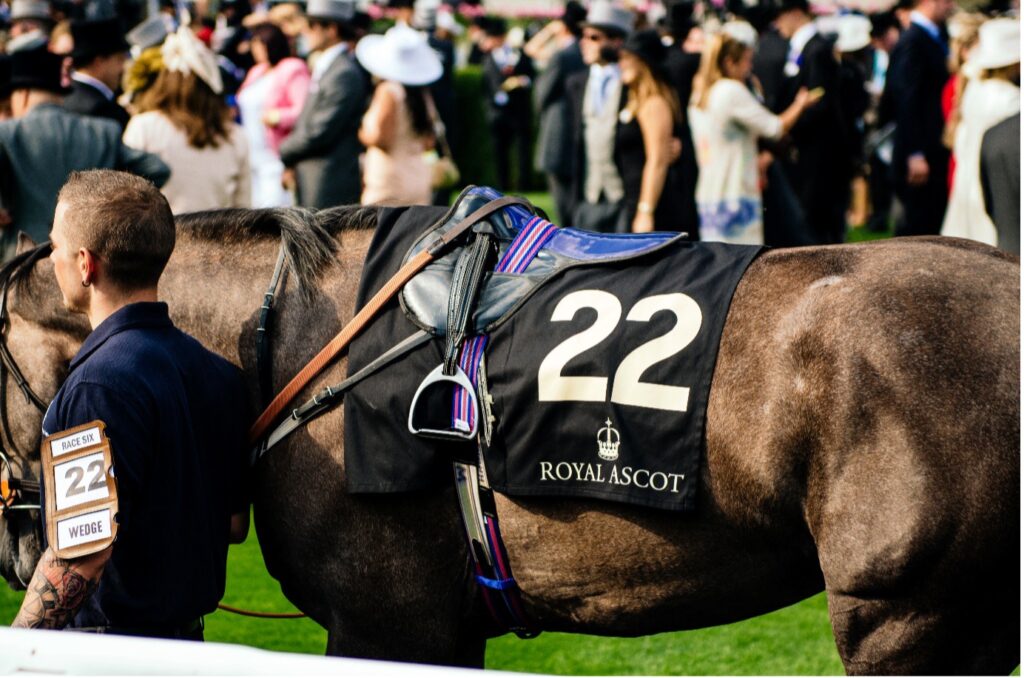
 Royal Ascot is five days of elite flat racing held each June at Ascot Racecourse in Berkshire. It is Britain’s most prestigious and most valuable fixture, distributing more than £9 million in prize money across 35 races.
Royal Ascot odds dominate the sporting betting landscape for the duration of the week, with millions of pounds wagered on contests that attract the best horses from Britain, Ireland, France, and beyond.
Eight of those races carry Group 1 status, the highest classification in European flat racing, and each one tells its own story. Here is a guide to the most significant contests across the five days.
Queen Anne Stakes (Tuesday, Group 1, 1 mile)
Royal Ascot opens on Tuesday with the Queen Anne Stakes, a mile contest for older horses that has traditionally served as the first major milers’ showdown of the summer. Named after the monarch who founded the racecourse in 1711, it is one of the most hotly anticipated openers in the racing calendar.
In recent years, it has attracted some of the finest horses to have graced the turf, with Frankel and Baaeed both passing through its winner’s enclosure. The race sets the tone for the week and regularly draws runners from the top yards across Europe.
King Charles III Stakes (Tuesday, Group 1, 5 furlongs)
Run on the same opening day, the King Charles III Stakes is pure sprint racing at its most intense. Contested over five furlongs on Ascot’s straight course, it is one of the most important sprint contests in the world and has attracted overseas challengers from as far afield as Australia.
Renamed in 2023 from the King’s Stand Stakes to mark the new King’s 75th birthday, the race has a history stretching back to 1860, when heavy rain forced the original two-mile card to be abandoned and replaced with a five-furlong alternative. It regained Group 1 status in 2008 and carries prize money of £650,000.
St James’s Palace Stakes (Tuesday, Group 1, 1 mile)
The third Group 1 on the opening day, the St James’s Palace Stakes brings together the best three-year-old colts over a mile, drawing heavily from horses that ran in the 2,000 Guineas at Newmarket, the Irish equivalent at the Curragh, or the French Guineas at Longchamp.
Established in 1834 and elevated to Group 1 status in 1988, it has been the stage for some of the most celebrated milers of the modern era. Frankel won it in 2011 as part of a season that cemented his status as one of the greatest horses ever to race. Aidan O’Brien has dominated the race in the modern era, winning it nine times.
Prince of Wales’s Stakes (Wednesday, Group 1, 1 mile 2 furlongs)
The Wednesday feature is widely regarded as the championship race of the week for middle-distance horses. Worth £1 million, it is the joint-richest race of the meeting alongside the Platinum Jubilee Stakes and attracts the best horses in training over a mile and a quarter.
First run in 1862 in honour of the future King Edward VII, it was discontinued after the Second World War and reinstated in 1968, eventually receiving Group 1 status in 2000. Recent winners include Auguste Rodin, trained by Aidan O’Brien, and Mostahdaf, who gave trainer John Gosden and jockey Jim Crowley a famous success in 2023.
Gold Cup (Thursday, Group 1, 2 miles 4 furlongs)
Thursday is traditionally the centrepiece of Royal Ascot, and no race commands more attention than the Gold Cup. Britain’s most prestigious staying test, run over two and a half miles since 1807, it is the first leg of the Stayers’ Triple Crown and the race that defines careers for the staying division.
Those looking for odds for horse races at any point during the week will find the Gold Cup generates more discussion than almost any other contest, given the tactical complexity of a race run over such an extreme distance.
Stradivarius won it three times between 2018 and 2020, while Kyprios claimed the prize in 2022 and again in 2024 after an extraordinary comeback from a serious injury. Trawlerman won the 2025 renewal in dominant fashion.
Coronation Stakes (Friday, Group 1, 1 mile)
The Friday equivalent of the St James’s Palace Stakes, the Coronation Stakes is restricted to three-year-old fillies and draws its runners from the Guineas generation on the fillies’ side. Established in 1840, two years after the coronation of Queen Victoria, it has held Group 1 status since 1988.
The race regularly features horses that contested the 1,000 Guineas at Newmarket or its Irish and French counterparts, and produces some of the most competitive Group 1 contests of the week. Eight of the last ten winners had previously run in a Classic.
Commonwealth Cup (Friday, Group 1, 6 furlongs)
A relative newcomer to the Royal Ascot programme, the Commonwealth Cup was introduced in 2015 as part of a broader restructuring of the European sprint calendar. Open to three-year-olds over six furlongs, it has quickly established itself as one of the most important sprint races of the season. It provides a natural stepping stone for horses developing from five to six furlongs, and winners regularly go on to contest the top sprint prizes later in the summer.
Platinum Jubilee Stakes (Saturday, Group 1, 6 furlongs)
The meeting closes on Saturday with the Platinum Jubilee Stakes, a six-furlong sprint for horses aged three and above worth £1 million. Renamed in 2022 to mark Queen Elizabeth II’s Platinum Jubilee, it regularly attracts large fields of the fastest horses in Europe.
The race has international pedigree, with challengers from Japan, Australia, and Hong Kong featuring in recent years. Khaadem won the race in consecutive years in 2023 and 2024. The big fields, often numbering fifteen or more, make for spectacular racing up the straight and provide one of the most visually dramatic finishes of the week.